
Sometimes, simple things change lives in ways we don’t notice right away. A few years ago, when we installed our first sanitary pad vending machine in a government girls’ school, one of the teachers quietly said, “This will save girls from embarrassment.” I didn’t forget that moment.
At Elevate Info System, we manufacture these machines, but to be honest, what we’re really building is comfort and confidence. Every time we see a school or office adopt one, we know we’re helping someone handle a very normal part of life with dignity.
If you’re curious about what these machines are, how much they cost, or why they matter so much, let’s just talk about it simply — no technical jargon, just how it really works.
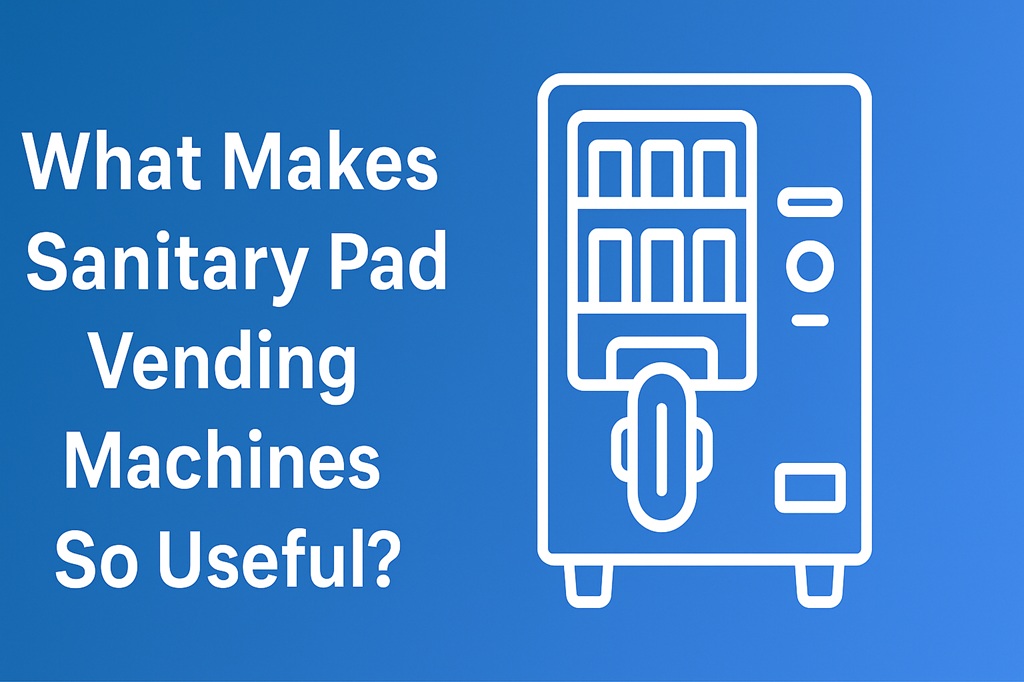
What Is a Sanitary Pad Vending Machine?
It’s exactly what it sounds like — a vending machine that gives sanitary pads instantly. You put in a coin, token, or scan a small digital code, and out comes a fresh sanitary napkin. No waiting, no asking anyone.
These machines are usually fixed on walls in places like schools, colleges, hospitals, and offices. They’re not very big, but they make a huge difference. Think about it — every woman, at some point, has faced an unexpected period. Having a vending machine nearby takes away that stress completely.
At Elevate Info System, we’ve designed ours to be simple, durable, and easy to use. The idea is that any woman, even a teenager using it for the first time, should feel comfortable.
What Is the Price of a Pad Vending Machine?
This is something people often ask right after they understand how it works. The price mostly depends on how advanced the model is.
A small coin-operated unit might cost between ₹6,000 and ₹10,000, while a smart model that accepts UPI or card payments can go up to ₹25,000 or ₹30,000.
We make machines in all ranges because different places have different needs. A rural school may prefer a manual version. A corporate office might want an automatic one. Either way, we build everything with the same goal — long life, simple maintenance, and reliable use.
And since our products are Made in India, parts and servicing are easy to find. That’s something many imported models don’t offer.
Is the Sanitary Pad Business Profitable?
It is, yes. But the truth is, it’s also a business that feels good to run. There’s profit, of course, but it comes with impact.
Menstrual hygiene products are something women need every single month. When you mix that with technology — like vending machines — you get a business that doesn’t just sell, it helps.
Over the past few years, the government and many NGOs have started supporting menstrual hygiene programs. Schools, hostels, factories — they’re all installing these machines. So the demand keeps rising.
Several of our clients started small, maybe installing two or three units, and then expanded once they saw the response. It’s a business that grows naturally because it meets a very real need.
Where Are Sanitary Pad Vending Machines Common?
You’ll find them in more places than you’d think.
- Schools and colleges use them so girls never have to miss classes.
- Offices install them as part of women’s welfare policies.
- Hospitals use them for both patients and staff.
- Factories rely on them because women often work long hours in remote locations.
- Public areas — railway stations, malls, even bus stops — are now adding them as part of smart city initiatives.
I’ve seen the change personally. When we started, these machines were rare. Now, we get daily calls from institutions that want to add them as a basic facility. Slowly, it’s becoming as normal as having a water cooler or hand dryer.
Why Are Sanitary Vending Machines Important?
Let’s be real — periods are still treated like a hush-hush topic in many places. That silence causes real problems. Girls miss school. Women feel uncomfortable asking for help.
A simple vending machine fixes that problem without any big talk. It gives privacy and choice. You don’t need to whisper to anyone; you just walk in, pay a small amount, and get what you need.
Beyond that, it’s about dignity. Access to sanitary pads is a basic part of women’s health. When institutions install these machines, they send a message: “We care about you.”
And that, honestly, is why we do what we do at Elevate Info System. We’re not just building a product — we’re building small pieces of equality.
How Do Sanitary Pad Vending Machines Work?
If you open one up, you’ll see it’s not complicated. Here’s the usual process:
- The user inserts a coin, token, or pays digitally.
- The machine detects the payment.
- One sanitary pad automatically drops into a small tray.
- The user picks it up and goes about her day.
Our newer versions have smart counters that track how many pads are left. Some even send an alert when the stock is low. A few advanced models are connected through IoT, so administrators can monitor usage from their phones.
But no matter the version, the main idea stays the same — easy, quick access without any awkwardness.
The Hidden Benefits Nobody Talks About
Everyone mentions convenience and hygiene, but there are a few underrated benefits too:
- They encourage awareness among girls and staff. When people see the machines, it sparks healthy discussions.
- They reduce absenteeism — girls don’t skip school during periods.
- They fit perfectly in CSR programs for companies that want to make a real difference.
- Many of our clients choose eco-friendly pads, which helps reduce waste.
- And lastly, they support local production since we manufacture in India.
Each unit installed creates a ripple effect — cleaner facilities, better awareness, and more comfort for women.
Maintaining the Machine
This part is simple. Clean the surface once in a while, refill pads when stock runs low, and check the coin or UPI system occasionally. That’s it.
Our team at Elevate Info System also trains staff on basic upkeep, so they can handle it without technical help. Most units last five to seven years, sometimes even more, depending on usage. Once installed, it doesn’t need much attention.
Cost Versus Value
Some people look at the initial price and hesitate, but once you see the impact, it’s hard to put a number on it. One small machine can serve hundreds of women every month.
We’ve had clients tell us that after installing these machines, morale improved among female staff. Schools reported fewer absences. Even parents sent thank-you notes.
So yes, it’s an investment — but one that pays back in goodwill, comfort, and health.
In Closing
If you ask me what I like most about this work, it’s not the machines themselves. It’s the stories that follow after installation. A student who didn’t have to skip an exam. A nurse who didn’t panic on a night shift.
That’s what sanitary pad vending machines are really about. Not metal, not wires — but relief, privacy, and care.
At Elevate Info System, we’re proud to make them here in India, using our own designs, with one clear purpose — to make menstrual hygiene simple, affordable, and available everywhere.
And maybe, just maybe, one day we’ll reach a point where this kind of accessibility isn’t newsworthy at all. It’ll just be normal. The way it should be.